Profile view of a bearded man wearing a black baseball cap and a dark gray T-shirt against a plain light background.

Central AC or mini split for a Massachusetts home

Step 1 of 3: Equipment

If your house already has ductwork, central AC is usually the simpler choice, and the gas furnace most Massachusetts homes heat with already has the ducts in place to carry cooled air too. A mini split makes more sense when there are no ducts to use, like an addition, a converted attic, or a house that heats with baseboard or radiators. Mini splits also cool room by room, so you can run one or two heads during a mild stretch instead of cooling the whole house. Central AC cools evenly through every room at once but means duct work if you don't already have it, which adds cost and disruption. Given how expensive power runs here, the right call often comes down to what's already built into your walls and attic, not which system is better on paper.

A gray outdoor air conditioning condenser unit on a concrete pad beside a house with horizontal lap siding, with a conduit and electrical disconnect box on the wall and a green shrub in mulch to the right.
One central system cools the whole house through the ducts your furnace already uses.
A weathered outdoor air conditioner condenser unit on a concrete pad beside a house with horizontal vinyl siding, with a conduit and disconnect box on the wall to the right.
A failing condenser like this is why a room with no ducts needs its own answer.

Central AC works off the same path your furnace already uses. Air gets pulled back through the return duct, passes over a cold evaporator coil, and gets pushed back out through the supply ducts into every room. That coil has to match the condenser sitting outside, which is why sizing one for your house means sizing both together. A mini split throws out the ductwork idea entirely. Refrigerant travels through a line set straight from the outdoor unit to an indoor head mounted in the room it's cooling, nothing more. One head, one room. That's fine in a house with a simple layout, but if you've got a few additions or a finished room over the garage, you may be looking at more than one head to cover all of it. There's also the matter of control. Central air runs off a single thermostat for the whole house. A mini split lets each room run at its own setting, which counts for more when only part of the house actually gets hot.

How Each System Actually Cools

  • A central system pulls air through the return duct, runs it over a cold evaporator coil, and pushes it back out through the supply ducts your furnace already uses.
  • The outdoor condenser and the indoor coil are matched as a pair, so an install has to size both to your house, not just swap one box for another.
  • A mini split skips ducts entirely: refrigerant runs through a line set straight to an indoor air handler mounted in the room it serves.
  • Each mini split head cools only the room it's in, which is why a house with several additions or finished rooms over a garage often needs more than one head.
  • Central AC answers to one thermostat for the whole house, while a mini split lets you set each room on its own, which matters most when only part of the house runs hot.
  • Both systems reject heat outside through a condenser, but a ducted system loses some of that cooled air to the attic or basement the ducts run through before it reaches the room.
An older man with gray hair and a beard leans back on a beige sofa with his eyes closed, in a sunlit room with potted plants, a wicker chair and large windows behind him.
A woman in a cream knit sweater sits in an armchair with her eyes closed and a slight smile, beside an open window showing orange autumn foliage, with a mug, books and a lit candle on a small side table.

A central system has one thermostat for the house, so every room shares the same setting even though a kitchen in July rarely matches a shaded bedroom upstairs.

A mini split gives each zone its own setting, which is the whole reason to add one when a single room runs hotter or colder than the rest of the house.

A man in a blue sweatshirt reclines with closed eyes in a brown leather armchair in a living room with a bookshelf, houseplant, sofa, window, and a side table holding newspapers and a dark mug.
A bearded man in a gray pullover reclines with closed eyes on a brown leather sofa in a sunlit room with a window, framed picture, potted plant, and a wooden cabinet holding papers and a dark mug.
A man in a gray sweater leans back with closed eyes in a brown leather armchair beside a wooden side table holding a dark mug and a folded newspaper, with bookshelves and a window seat behind him.
A man in a green sweater reclines in an armchair with his eyes closed and a slight smile, beside a window with plants, a small table holding a mug and folded newspaper, and bookshelves behind him.

If central air fits your ducts

You already pay to run air through those ducts every winter, so cooling it in July costs you one install instead of two systems to maintain. One thermostat, one filter to change, one unit the furnace guy already knows how to service alongside the furnace. The tradeoff shows up on the muggiest days, when the room farthest from the furnace lags behind the one closest to the thermostat. With power rates here, an older condenser running long cycles to catch up is the part that shows up on your bill.


If a mini split fits your room

A three season porch or a finished attic with no return duct near it either gets its own system or stays the room nobody sits in by August. A mini split solves that without opening a wall to run ductwork through a house that was not built for it. You get a setting for that one room instead of fighting the thermostat for the rest of the house. The cost you take on instead is a second system to maintain, a second filter, and an outdoor unit mounted where this one room needs it.

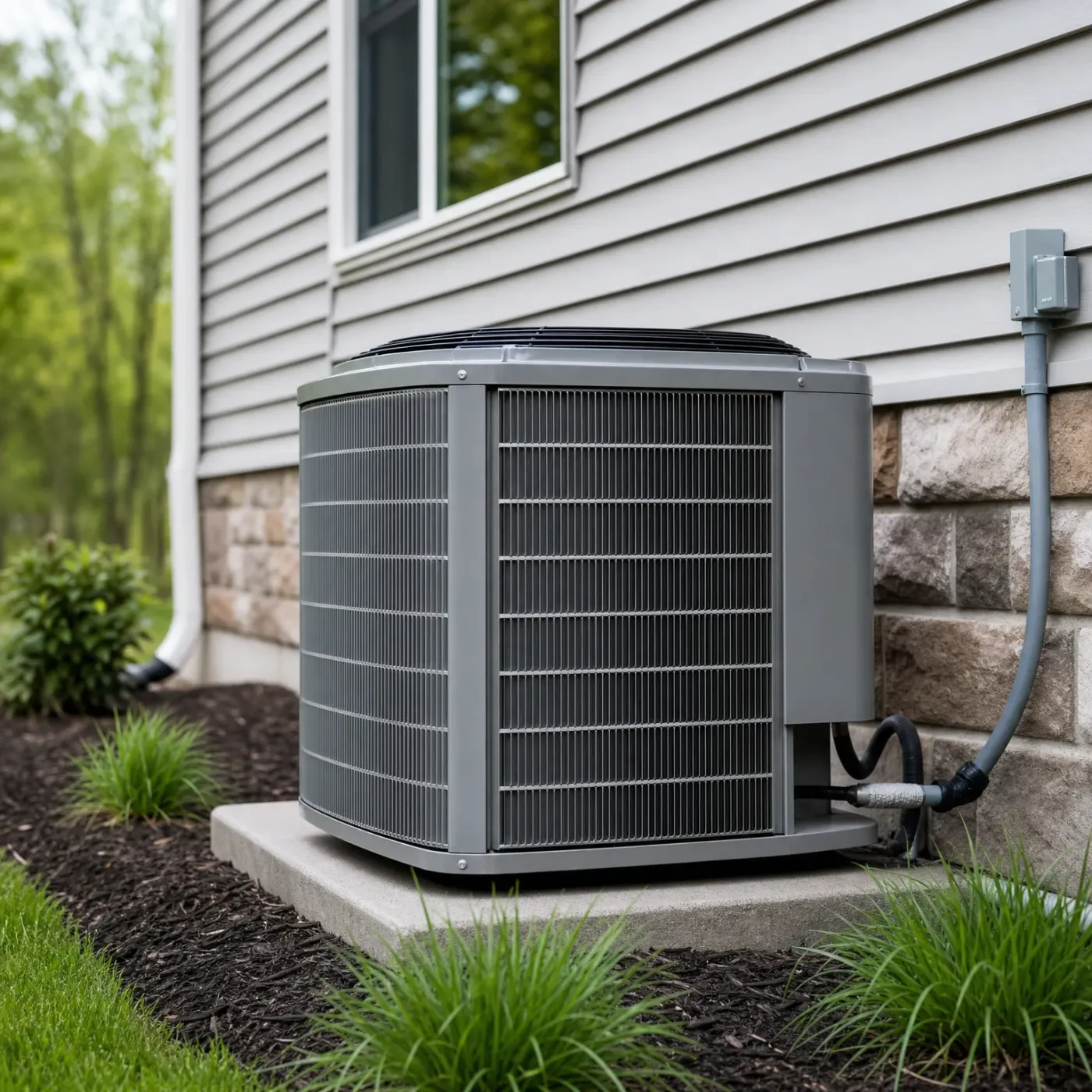
An outdoor air conditioner condenser unit on a concrete pad beside a house with horizontal lap siding, with a conduit running to a gray electrical disconnect box on the wall.
Before you get your air conditioner installation
A gray outdoor air conditioner condenser unit on a concrete pad beside a house with horizontal lap siding, with a wall-mounted disconnect box and conduit at left and a green shrub and mulch bed at right.
After you get your air conditioner installation
A gray outdoor air conditioner condenser unit on a concrete pad beside a house with horizontal siding and a stone veneer foundation, surrounded by mulch, ornamental grasses, and shrubs, with a conduit and disconnect box on the wall.

Send one request and you're done looking

One installer gets your project, so there's no bidding war over it.

After you send the request, you're done searching.

Hand off the search

No fee to send it, and nothing to sign.

How does a mini split actually cool a room without ducts?

You keep seeing central air explained through the ducts your furnace already has, but your question is about the room that doesn't have any. You want to know what actually happens inside that unit on the wall, since there's no duct work doing the carrying.

A mini split cools the air right where it hangs on the wall

Inside that indoor unit is a small evaporator coil and a fan. Refrigerant runs through a line set to an outdoor compressor, the coil gets cold, and the fan pulls room air across it and blows it back out, cooled, straight into that room. There's no duct run carrying the air anywhere else, which is why the unit has to sit in the space you want cooled. The outdoor compressor does the same job a central system's condenser does, it just serves one indoor head instead of a houseful of supply ducts. Add a second indoor head on the same outdoor unit and you've got a second zone with its own setting.

Single-story house with tan horizontal siding and a dark shingled hip roof, fronted by a patchy green and brown lawn and a concrete walkway leading to the covered entry.

Summer air in Massachusetts holds a dew point around 60°F on average across June, July and August, by National Weather Service data. That's the sticky edge, the point where the air starts feeling heavy instead of just warm. Your air conditioner has to pull that moisture out before the room actually feels cool, so on the muggiest days it runs longer just to get the humidity down, not only the temperature. A central system does that through the whole house at once, pulling damp air across the coil and sending it back out drier through the same ducts your furnace uses. You'll notice it in how long the unit stays on, not just in what the thermostat reads.

NASA POWER T2MDEW county cells weighted by homes

Is one room in your house always the problem?

Maybe it's the room over the garage, or the addition that was tacked on without extending the ductwork. You close the vent in other rooms trying to push more air there and it barely helps. By August you've probably got a window unit propped in that room, rattling, dripping onto the sill, running the power bill up in the room that needed help least efficiently. If the rest of the house cools fine and this one space never does, that's not your central air failing. It's a sign the ducts never reached that room to begin with, and no amount of adjusting vents or running the system longer is going to change that.

An outdoor air conditioner condenser unit on a concrete pad beside a house wall, with a gray electrical disconnect box and conduit above it and grass in the foreground.

Running central air all summer

Your gas furnace blower keeps moving air through the same ducts from June through September. The condenser outside and the coil inside share the load evenly, so a 2,000 square foot house with good ducts holds a steady temperature room to room. Massachusetts power rates run high, and a central system sized right for your house is still one compressor doing the work instead of several, which matters when the bill arrives in August.

A gray outdoor air conditioner condenser unit on a concrete pad beside a house with horizontal lap siding, surrounded by white gravel and a lawn, with a white wall at left.

Running a mini split instead

A mini split only runs the zones you're using, so the guest room stays off while the living room where you actually sit gets cooled. There's no duct leakage losing cooled air in a hot attic before it reaches a vent. Each indoor unit has its own remote and its own setting, so the room that always ran warm under a window unit finally gets handled on its own, without touching the temperature anywhere else in the house.

Power costs 30.41 cents per kilowatt-hour statewide

At 30.41 cents a kilowatt-hour, an oversized or poorly matched condenser shows up fast on your bill. Sizing the install to your house, not just your ducts, is what keeps a Massachusetts summer from turning into an expensive one.

EIA-861 2025 statewide residential average

The Right System for Your House

  • Ducts already in the house point to central air, and no ducts points to a mini split for that room.
  • A mini split answers the one room central air can't reach without new ductwork.
  • Sizing the condenser to the house, not just the ducts, keeps a Massachusetts summer off the top of your electric bill.
  • A local contractor who installs these systems every summer knows which one actually fits your house before work starts.
  • Sending one request means one contractor looking at your ducts and your rooms, not a pile of calls to sort through.
  • Either system comes down to matching the equipment to the house you already have.

The answer was never one system beats the other. It's whether your house already has ducts doing the work, or whether there's a room that ducts never reached. Most Massachusetts homes heat with gas and already have ductwork running through the walls, which makes central air the straightforward move. The room over the garage, or the addition nobody extended the vents into, is a different problem, and that's what a mini split is for. Either way, the equipment has to match the house, not just the square footage. A condenser sized to your ducts and your rooms is what keeps a July heat wave from turning into a December electric bill you weren't expecting, especially with power priced the way it is here.

Getting that sizing right is why the contractor matters as much as the equipment. Someone who installs these systems every summer in Massachusetts has seen which ducts can carry a central system without modification and which rooms keep losing the battle no matter how high you set the thermostat. That's not a guess made from a brochure. It's knowing what usually fails in a house like yours before the first wall gets opened.

Sending the request connects you with one contractor, local to you, looking at your actual ducts and your actual rooms. Not a list of companies competing for the job, just the one who shows up knowing what to check first.

A curving paver walkway runs alongside a house with beige lap siding and a white-trimmed window, bordered by low shrubs, grassy plants, and trees in sunlight.
A dark-framed casement window with divided upper panes set in a stucco wall beside a stone-clad section, with hydrangeas, hostas and trimmed shrubs in a mulched bed above a lawn.
White horizontal lap siding wall with a single six-pane double-hung window, above a mulched bed of hydrangea shrubs with browning blooms, bordered by mown grass in low sunlight.
Interior corner with tan plaster walls, a potted olive tree in a large terracotta urn beside a floor-to-ceiling window, and a wooden bench with a beige cushion on a herringbone brick floor partly covered by a woven jute rug.
A wooden bench beneath a window holds a green linen cushion and a fringed cream throw, with a woven basket stored underneath on a wood plank floor.

Finding a pro stops being your job

Your request goes to one pro, not a list of companies.

Send my request

Sending the form costs nothing.